In Full Bloom: Flowers in Contemporary Art
Few subjects have held artists' attention across as many centuries, cultures, and movements as the flower. From the white lilies that graced Renaissance altarpieces to the blazing sunflowers Vincent van Gogh rendered in Arles, blossoms have served as one of painting's most enduring and versatile languages. They can signal love, mourning, spiritual awakening, political defiance, and the sheer joy of being alive. They are, at once, the most modest and the most loaded subject a painter can choose.
Flowers in art are never just flowers. The Dutch masters of the 17th century understood this well, arranging their impossibly lush bouquets as meditations on beauty, mortality, and the vanishing nature of earthly wealth. The Victorians encoded entire emotional vocabularies into floral arrangements, sending messages that polite society would never allow to be spoken aloud. Georgia O'Keeffe turned the close-up of a single bloom into a statement about scale, perception, and feminine vision. Andy Warhol flattened flowers into pure color and repetition, transforming the garden into something closer to a billboard. In every era, the flower bends to carry whatever its moment needs it to say.
Today, contemporary artists continue that tradition with extraordinary range. Mash Gallery brings together works that collectively explore what flowers mean right now, at the intersection of beauty, identity, joy, and the natural world.
Morning Glory by Haleh Mashian

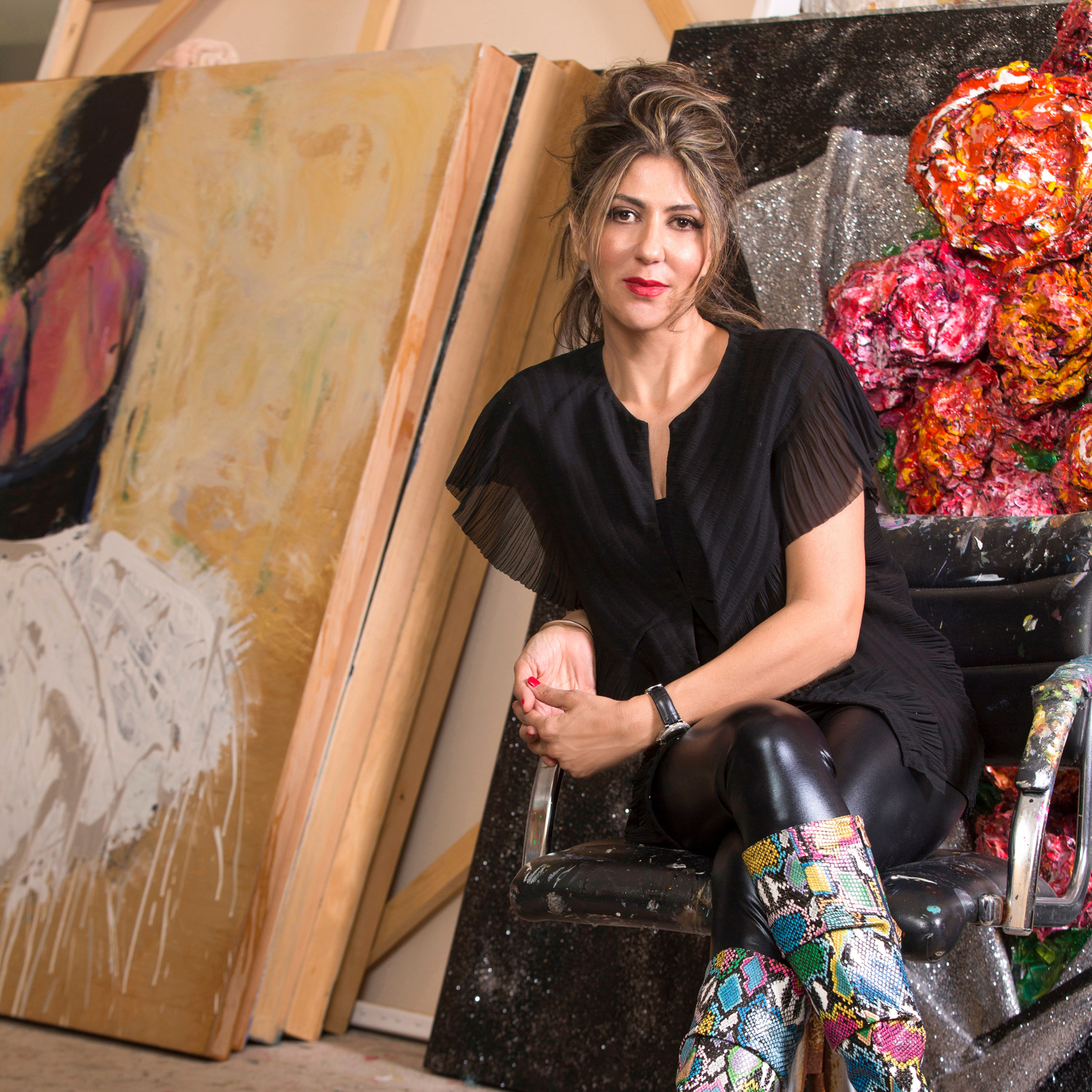
Morning Glory by Haleh Mashian opens this conversation with characteristic energy. Mashian's bold, textured surfaces transform a familiar bloom into something charged and personal, the morning glory becoming a symbol of renewal at the start of each day.

Philip Letsu's Ready to Go carries a kinetic optimism that mirrors the flower's own impulse upward toward light. Letsu's vivid palette and gestural confidence make this work feel less like a painting and more like a declaration.

Justin Price's Best of All Possible Worlds takes its title from Voltaire's Candide, and in Price's hands the floral becomes an expression of radical hope, the idea that beauty, cultivated and tended, is its own form of philosophical argument.

Gary Brewer's Begetter of Love reaches toward something older. Flowers as the origin of desire, as the first gift, the first language of longing. Brewer's contemplative approach draws on art history's deep tradition of associating the blossom with the erotic and the sacred simultaneously.

Jill Daniels brings her signature luminosity to Perpetual Wonder, a work that asks us to sit with the uncanny fact that flowers keep being beautiful no matter what else is happening in the world. There is something quietly radical about that observation.

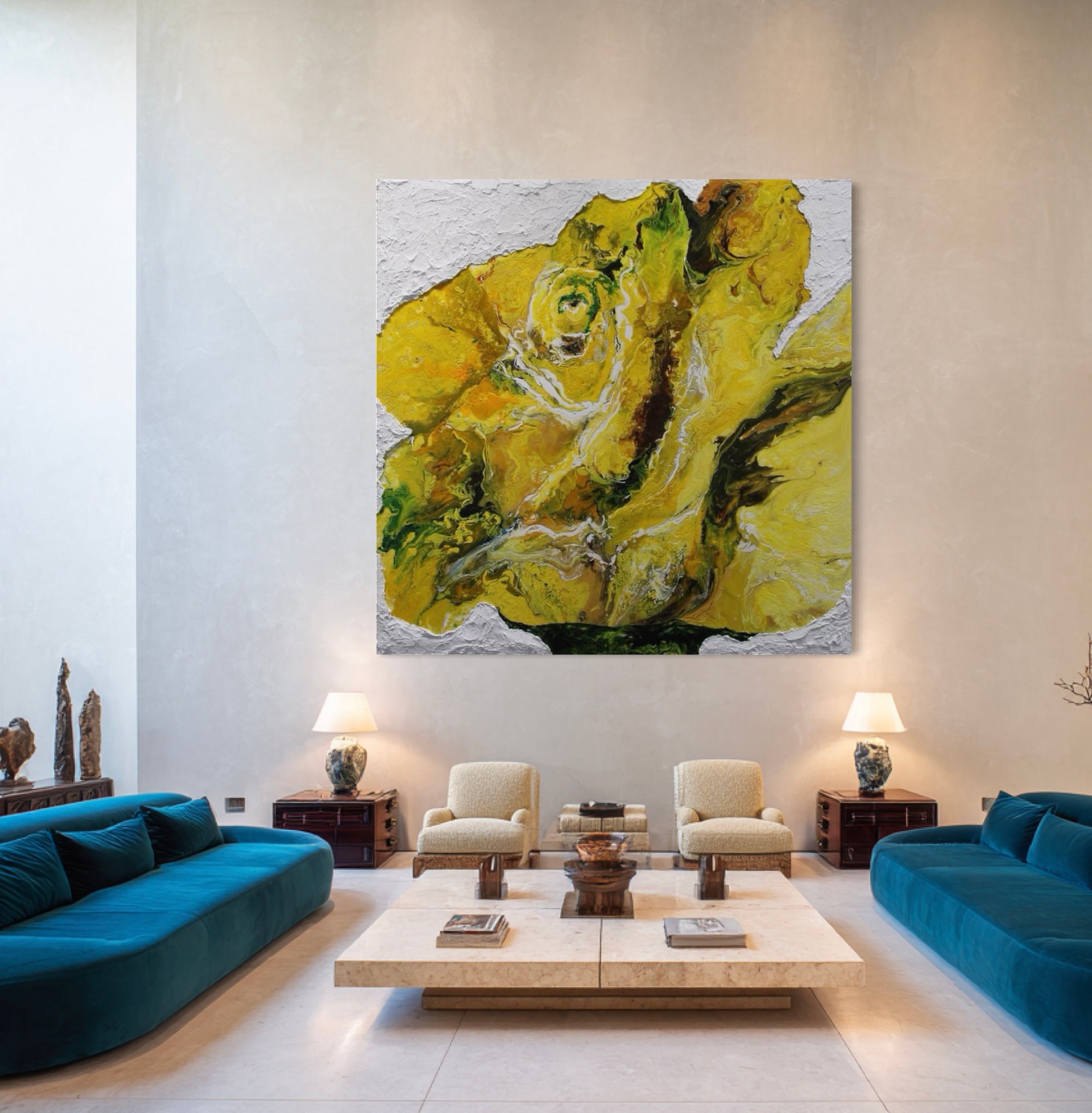
Michael Vilkin's Orchid in Yellow Glass is a study in restraint and precision. The orchid, long associated in Asian painting traditions with scholarly virtue and refined character, is here rendered with the kind of attention that transforms still life into portraiture.

Lola Okunola's All Eyes On Me turns the floral gaze back on the viewer. This is a work about presence and visibility, the flower not as passive subject but as assertive figure demanding to be seen on its own terms.

And then there is Burton Morris, represented here by three works that capture his singular vision of contemporary life rendered in the vocabulary of pop. Jardin de Mode places the garden inside the world of fashion and aspiration, the flower as luxury object, as cultural signifier.

Pop in Bloom is pure celebration, blossoms exploding in the flat, saturated color Morris has made his own.

Rose Couture I does what the best floral paintings always do: it makes you look at something you have seen a thousand times and see it completely fresh.
Together these works make the case that flower painting is not a tradition resting on its laurels. It is alive, contested, personal, and still very much in progress. Whatever the flower meant to Botticelli, to van Gogh, to Georgia O'Keeffe, it means something different and equally necessary to the artists working today. Come see for yourself.
Browse the full collection at www.mashgallery.com or visit us at 812 N. La Cienega Blvd. Los Angeles, CA 90069.