Why I Founded a Gallery Instead of Just Making Art
There is a version of my life where I stayed entirely in the studio. Where every conversation I had was between me, my canvas, and whatever color I was chasing that week. That version of me was real once. She still is. But somewhere around 2018, I started noticing a gap — not in my own practice, but in the world around it.
Los Angeles has always been a city with extraordinary artists. What it was missing, at least in the spaces I moved through, was a certain kind of home for them. Not a white cube that kept people at arm's length. Not a commercial operation more interested in names than in work. Something warmer, more intentional, more committed to conversation between the artist and the person standing in front of their painting for the first time.
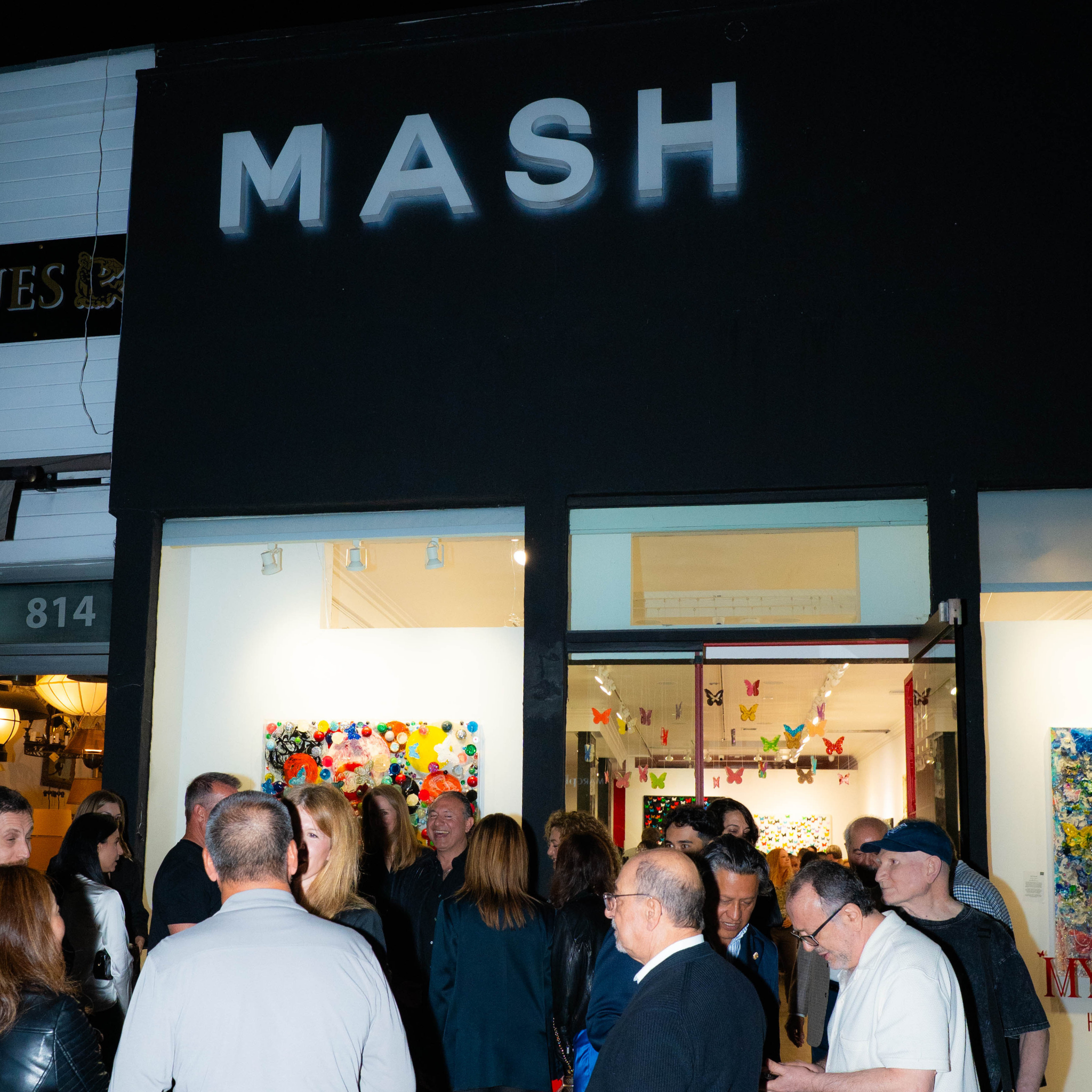
That gap is why I opened Mash Gallery in the Arts District of Downtown LA. Not to stop making art, but because I understood something about platform-building that being a solo artist alone couldn't satisfy: a gallery, at its best, is a multiplier.

What Was Missing in the LA Art World in 2018
The Los Angeles art world can be seductive and exclusionary in the same breath. There were galleries doing beautiful things, museum programming that genuinely moved people. But the space between emerging artists who deserved serious attention and collectors who were ready to invest in something beyond a blue-chip name felt thin.
I wanted to build something in that gap. A gallery that took emerging and mid-career artists seriously. That introduced collectors to names they hadn't encountered yet. That treated the viewing experience as something worth designing, not just hanging.
I was also thinking about community in a very specific way. Not community as an abstract concept, but community as something you build through repeated contact: returning visitors, long-form relationships with artists, collectors who come back not because they're hunting for an investment but because they trust what they'll find.
That trust takes years to build and we've been building it.
What I Look for When I Curate
People ask me this often, and I find it genuinely hard to answer. Not because I don't have instincts, but because those instincts aren’t easy to express.
The first thing I look for is internal logic. Does the work know what it is? There's a difference between an artist who is still searching and an artist whose search has produced something coherent, even if it's evolving. I'm drawn to the latter. Not work that's finished in spirit, but work that has a clear center of gravity.
The second thing is emotional honesty. This doesn't mean confessional work. It means work where you can feel the artist meant it. Technique without that quality leaves me cold, no matter how impressive the execution.
The third is something harder to name. I sometimes call it residue. After I leave a studio visit or close a portfolio, what stays with me? What image do I carry home? If nothing does, that tells me something important.
I've turned down shows that looked right on paper — strong resumes, recognizable styles, work that would have been easy to sell. I turned them down because the work felt assembled rather than created. And I've said yes to artists who surprised me completely, whose work I had to sit with for days before I understood why I couldn't stop thinking about it. Those are usually the shows I'm proudest of.
The most interesting curatorial decisions are never the obvious ones.

The Future of the Physical Gallery
There is a persistent conversation in the art world about whether the physical gallery is declining, displaced by online viewing rooms, art fairs, social media discovery, and digital-first collectors. I understand where that conversation comes from. I've built online viewing experiences myself. I take the digital dimension of gallery work seriously.
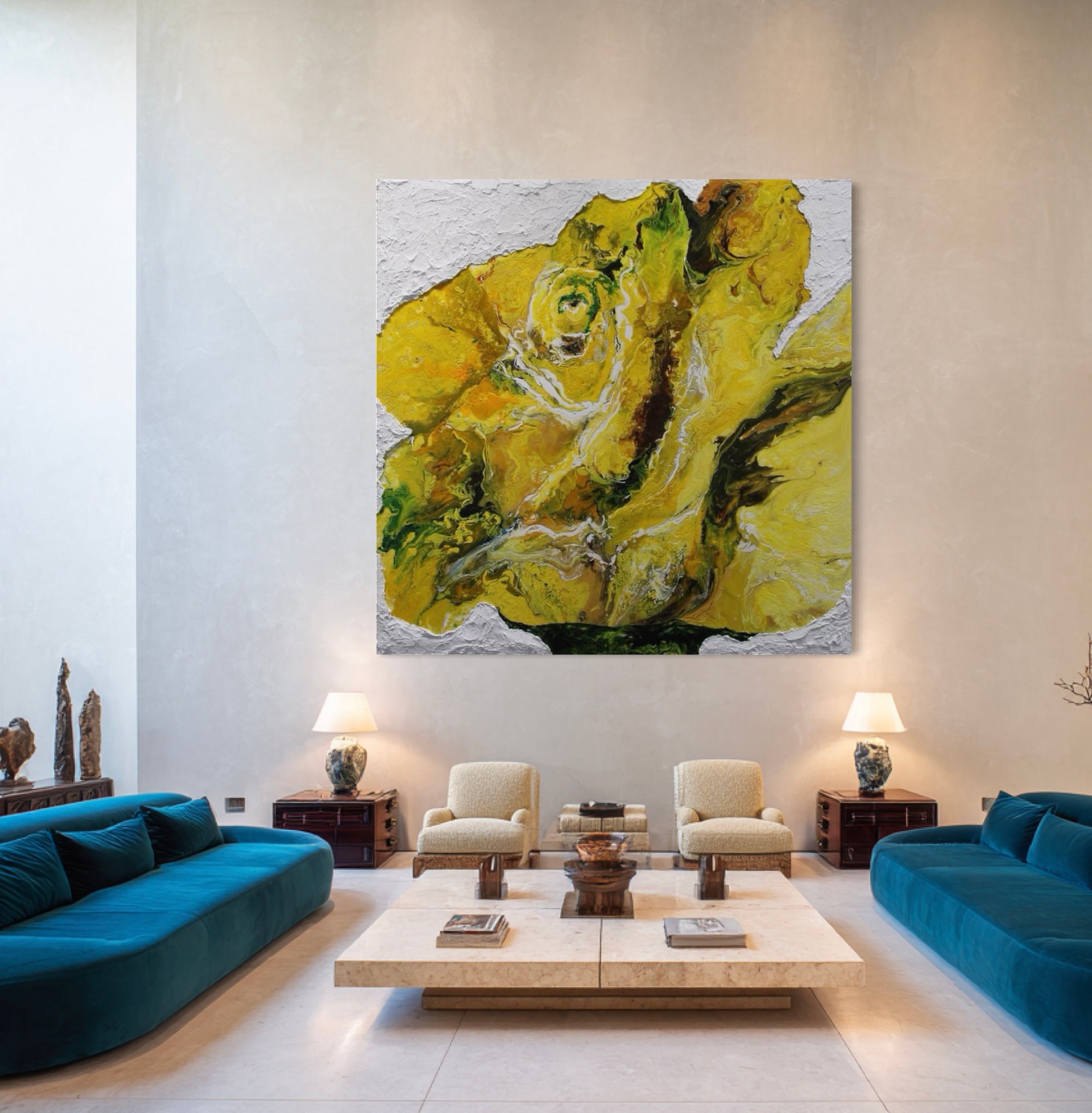
But I keep returning to something I know from my own practice as a painter: there are things a painting does in person that it simply cannot do on a screen. Scale. Texture. The way light shifts across the canvas. The experience of standing in a room with something that asks something of you.
The physical gallery is not a legacy format. It is the only format where all of that happens at once.
What I think is changing, and what I find genuinely exciting, is what the physical gallery is for. It is less and less a point of sale and more and more a point of experience. The galleries that will matter going forward are the ones that understand the difference. The ones that design every element of the in-person encounter with the same intentionality they bring to the work they select.
That's what I'm building toward. Not a gallery as a retail operation with art on the walls, but a space where something happens to you when you walk in. Where you leave thinking about a painting you didn't expect to care about.
That possibility still keeps me going. In the studio and the gallery.
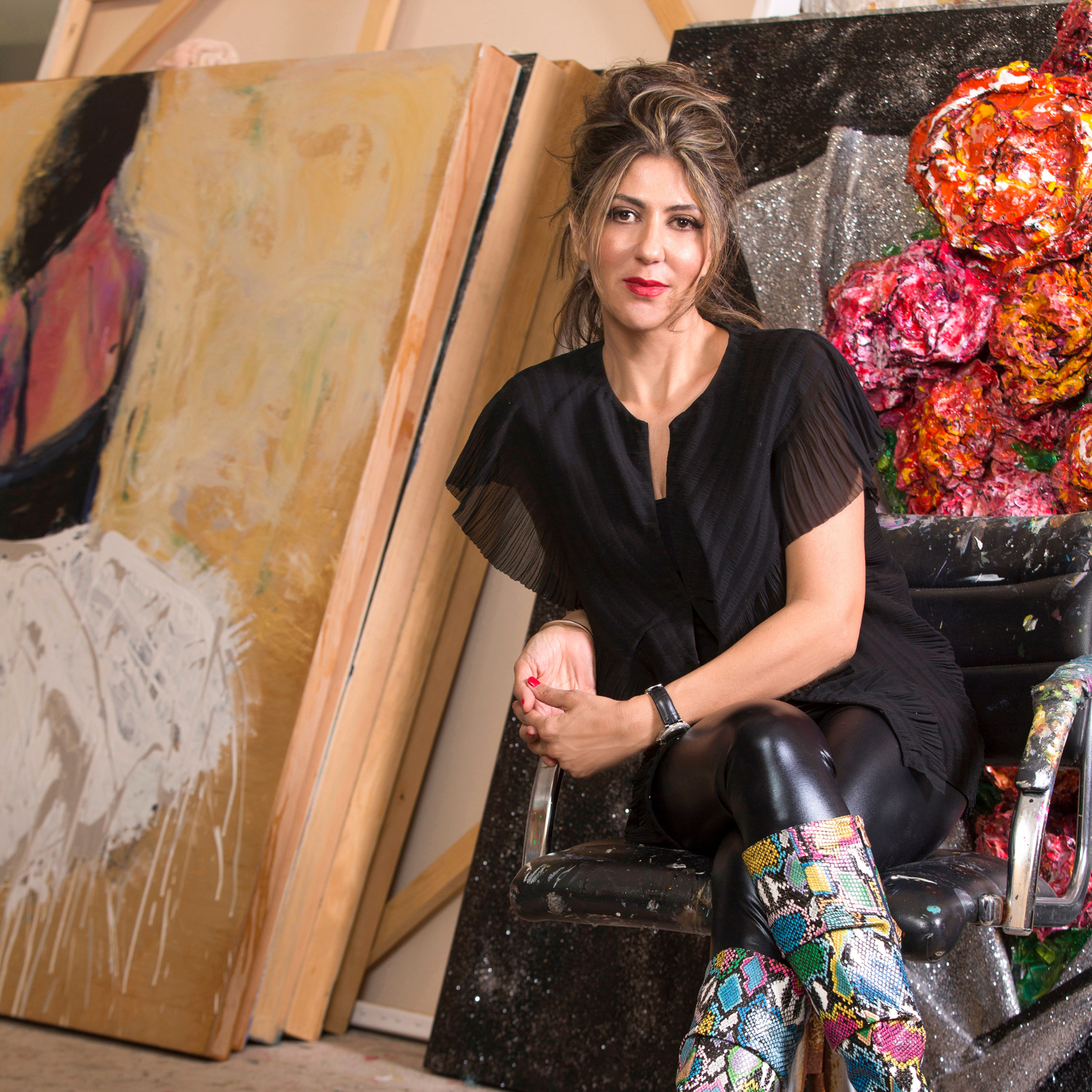
Haleh Mashian is an artist and the founder of Mash Gallery, located at 812 N. La Cienega Blvd. in West Hollywood. Her personal work spans the Butterfly, Tree, Water, Rose, and Figurative Series. Learn more at halehmashian.com.