The Intersection of Art, Fashion, and Interior Design
A shared language of form, texture, and lived experience
Art, fashion, and interior design exist in a constant, quiet conversation. Each discipline shapes how we experience space, identity, and culture—one on the wall, one on the body, one in the environment we inhabit every day. When these worlds intersect, the result is not decorative layering but a cohesive way of living with visual intelligence.
At their core, all three disciplines ask the same questions: How do form and material affect emotion? How does scale influence perception? How do color, texture, and rhythm shape behavior and memory? When aligned, art, fashion, and interiors create environments that feel intentional, expressive, and deeply personal.
Shared Origins: Function Meets Expression

Historically, art, clothing, and interiors were never separate categories. In palaces, temples, and private homes, murals, textiles, furnishings, and garments followed the same aesthetic codes. Pattern, symbolism, and craftsmanship moved fluidly from tapestries to robes to architectural detail.
Interior design absorbed artistic movements just as fashion did. Baroque drama, Rococo ornamentation, Modernist restraint—each era manifested simultaneously in painting, dress, and domestic space. These were not trends; they were cultural expressions translated across mediums.
Modern Living: When the Home Becomes Curated
In contemporary culture, the home has become an extension of identity, much like personal style. Interiors are no longer neutral backdrops. They are curated environments shaped by art collections, sculptural furniture, and tactile surfaces.
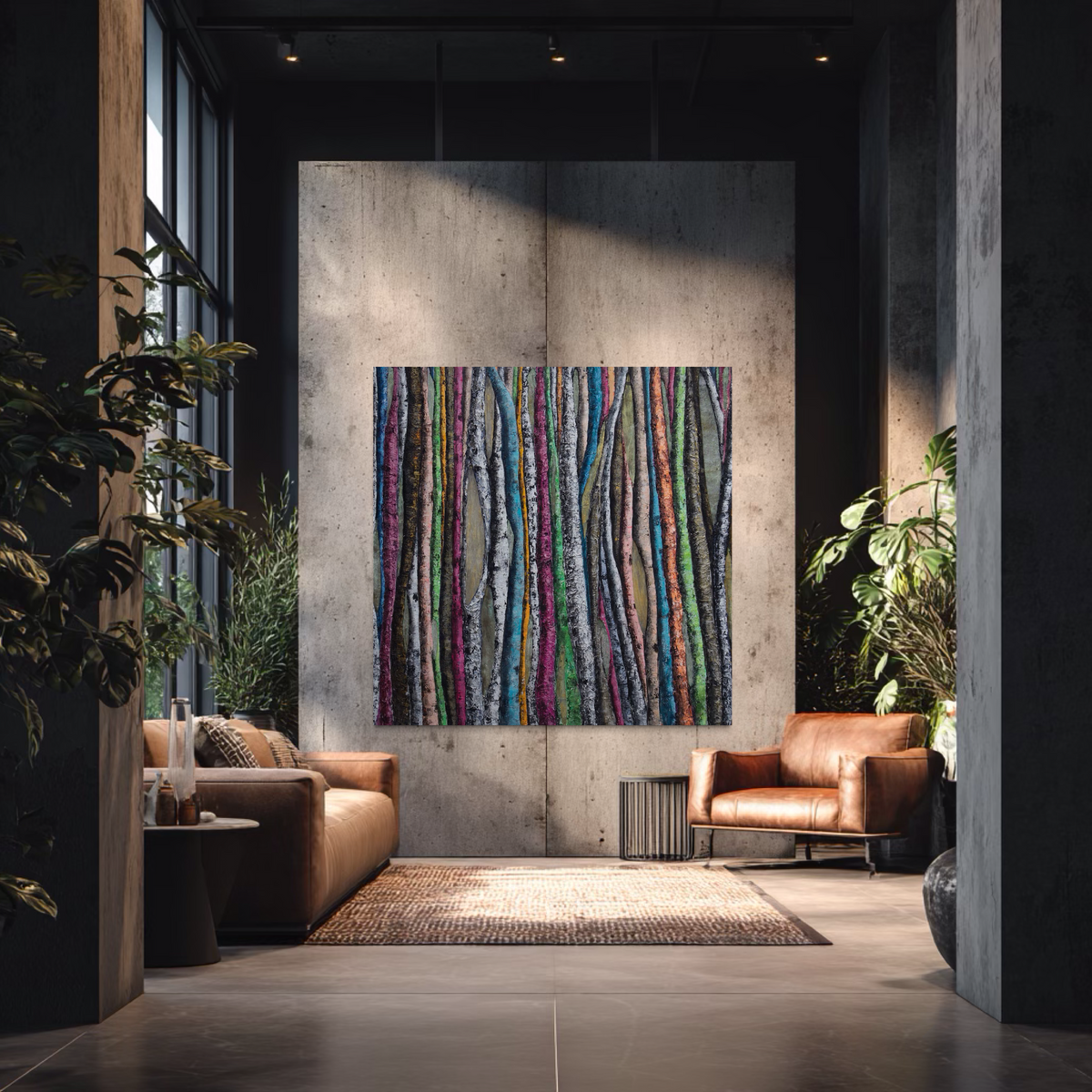
Collectors often approach interiors the way designers approach collections: with a point of view. A single artwork can set the tone of a room, much like a statement garment defines an outfit. Scale, placement, and negative space matter. The room becomes a composition, not a container.
Fashion plays a role here as well. The same sensibility that guides how one dresses—bold or restrained, layered or minimal—often guides how one lives with objects and space.
Texture as the Bridge Between Disciplines
 Texture is where art, fashion, and interior design truly meet. In fashion, texture gives garments presence and depth. In art, surface carries meaning and physicality. In interiors, texture shapes how a space feels long before color or form is processed.
Rough versus smooth. Matte versus reflective. Dense layering versus quiet restraint. These decisions influence whether a room feels grounded or expansive, intimate or energized.
In interiors, textured art can soften architectural rigidity or anchor an open space. Similarly, fashion-inspired materials—woven textiles, pleated forms, metallic finishes—introduce movement and dimension into rooms. Texture allows muted palettes to feel rich and layered, while bold color becomes more controlled and intentional.
Color, Mood, and Spatial Psychology

Color operates differently across the three disciplines, yet its psychological impact remains consistent. In fashion, color communicates confidence, introspection, or rebellion. In art, it constructs narrative and tension. In interiors, it governs mood and behavior.
Muted tones paired with tactile surfaces create calm, contemplative environments. Vibrant hues, when grounded through texture or form, bring energy without overwhelming a space. Art becomes the mediator—balancing boldness and restraint.
Collectors and designers increasingly use artwork as a way to introduce color strategically. Rather than saturating a room, a single piece can carry chromatic weight, allowing the surrounding space to breathe.
The Body, the Room, and Scale
Fashion is designed for the body. Interiors are designed for movement through space. Art often negotiates between the two.
Scale is critical. Oversized artworks function architecturally, defining zones within a room. Sculptural furniture borrows from both fashion silhouettes and fine art forms. The way a garment drapes mirrors how a curtain falls or how a wall installation occupies volume.
Designers and collectors think spatially now, considering how the body encounters art in a room—how close one stands, how light changes surface, how texture invites or resists touch.
Craft and Material Integrity Across Mediums

Craft is the unifying value across art, fashion, and interiors. Handwork, material choice, and process signal intention and longevity. In an age of mass production, this shared respect for making has become a marker of discernment.
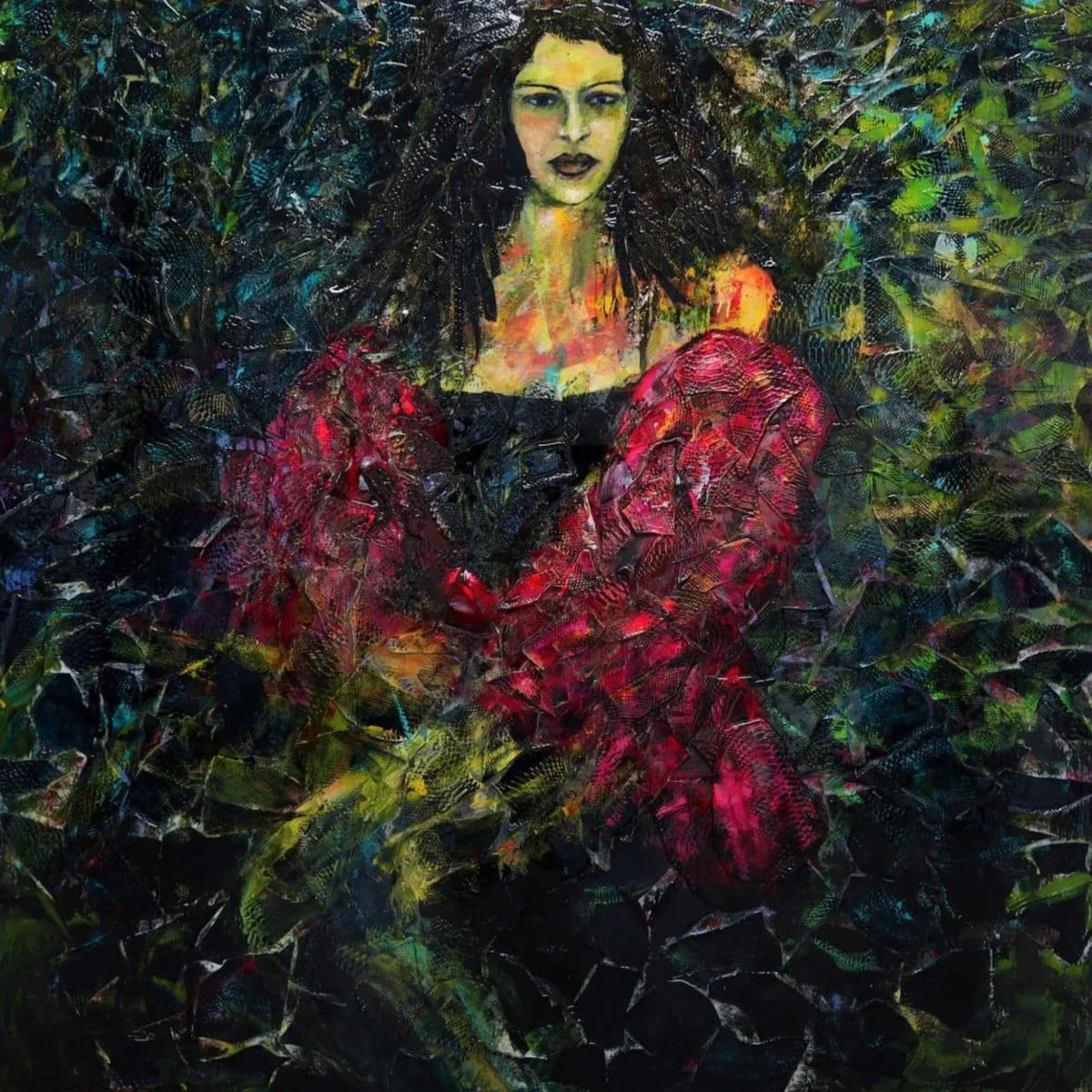
A couture garment, a mixed-media artwork, and a custom interior finish all rely on the same principles: precision, patience, and material awareness. These objects carry presence because they reveal how they were made.
This is why collectors and interior designers are increasingly drawn to artworks with physical depth and surface complexity. These pieces hold their own in designed spaces, offering substance rather than decoration.
Living With Art: From Gallery to Home
As galleries, runways, and design studios continue to influence one another, the lines between disciplines grow less rigid. Fashion exhibitions resemble installations. Homes are styled like private galleries. Art is collected not only for walls, but for how it shapes daily experience.
Art in interiors does more than complete a room. It establishes rhythm, anchors space, and reflects the values of those who live with it. Fashion contributes its sensitivity to proportion and material, while interior design provides context and continuity.
A Unified Visual Language
 The intersection of art, fashion, and interior design is not about matching styles. It is about coherence. When these disciplines align, they create environments that feel thoughtful rather than staged, expressive rather than excessive.
This convergence speaks to a broader cultural shift—toward living with intention, collecting with discernment, and designing spaces that resonate on a human level.
Art hangs on the wall. Fashion moves with the body. Interior design surrounds us. Where they meet, they shape not just how things look, but how life feels within them.