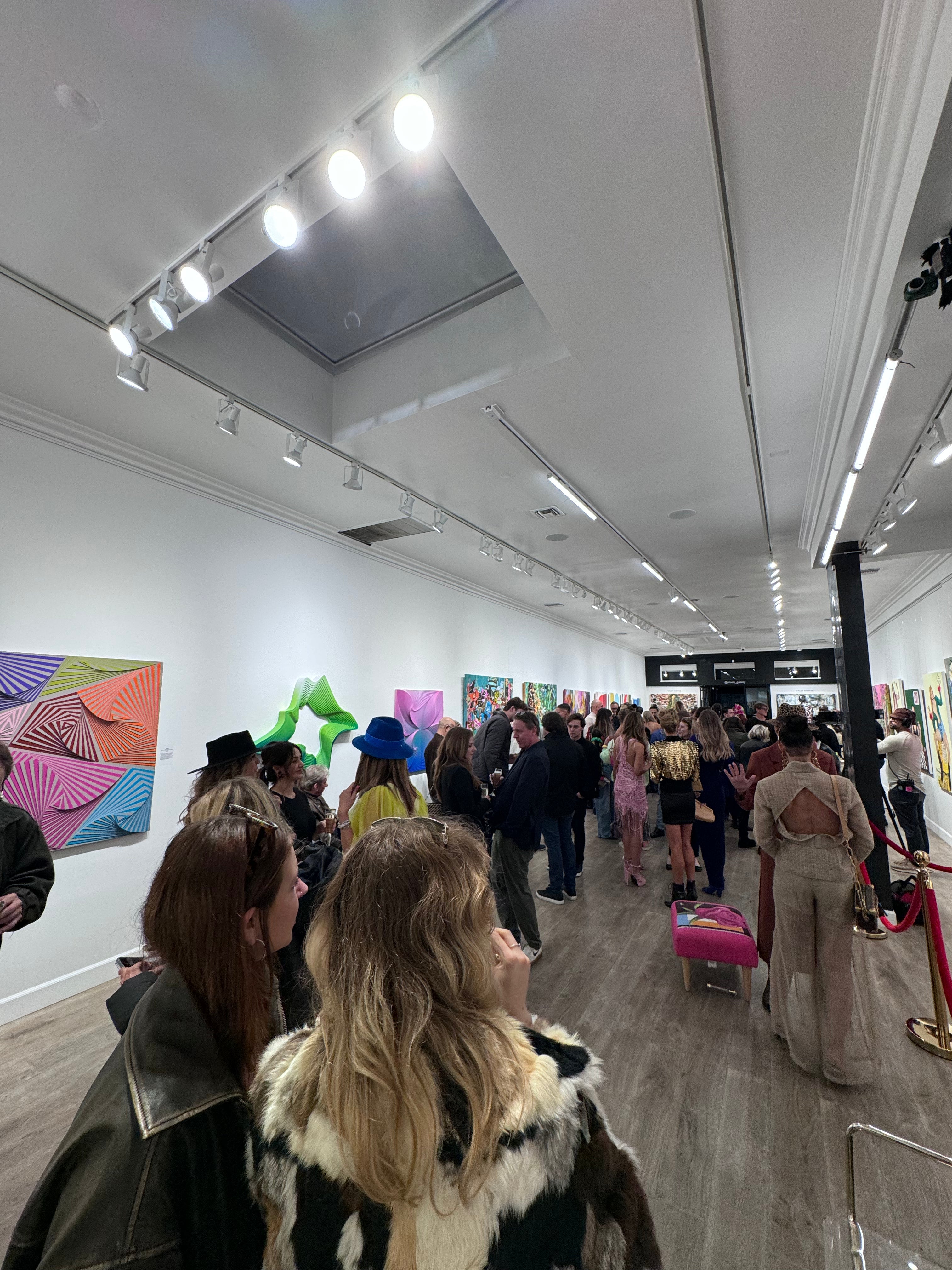
The Art Market’s Hidden Architecture: Power, Prestige, and the Business of Value
The contemporary art market is not built on talent alone. It is shaped by relationships, long-term strategy, and the quiet systems that determine how value is created and sustained. As Andy Warhol once observed, being good in business is its own form of art. Nowhere is that more evident than in the world of contemporary art, where creativity and commerce are deeply intertwined.
For art collectors and interior designers navigating today’s market, understanding this structure offers clarity and confidence. Behind every artist’s rise, every price increase, and every market shift, there are deliberate decisions shaping visibility, placement, and perception.

Primary and Secondary Markets: Where Artistic Value Begins
The art market operates through two interconnected systems, each playing a distinct role in how value develops.
The Primary Market
This is where artworks are sold directly from the artist’s studio through a gallery. These early placements are crucial. Galleries carefully select collectors who align with the artist’s long-term trajectory. Early ownership is not simply transactional. It helps establish credibility, context, and future opportunity.
The Secondary Market
Once an artwork has been owned before, it enters the secondary market. Here, value is influenced by provenance, collector history, institutional connections, and public visibility. For many buyers, previous ownership adds reassurance. It signals that the work has already been validated within the cultural ecosystem.
In the art world, history becomes part of the artwork itself.

Why People Buy Art: Three Enduring Motivations
While trends shift, collector psychology remains remarkably consistent. Most purchases are driven by a combination of three motivations.
Love for the work itself and the personal connection it creates
Investment potential and confidence in long-term value
Status and cultural alignment within a broader social or professional circle
Most collectors move fluidly between these reasons. Interior designers often balance emotional response with longevity and placement within refined spaces.
Quality and Price: A Counterintuitive Relationship
In contemporary art, price does not function like traditional commodities. A work is rarely valued based on material cost or labor alone. Instead, pricing reflects narrative, strategic placement, gallery representation, and collector context.
Prestigious collectors are often offered first access, not because they pay more, but because where a work lives matters. Legendary dealer Leo Castelli understood this well. He prioritized placement over immediate profit, knowing that thoughtful ownership stabilizes and elevates an artist’s career.
For artists, a respected collection can shape decades of opportunity.

How Galleries Build and Protect an Artist’s Market
Successful galleries operate as long-term stewards, not short-term sellers. Their role extends far beyond exhibitions.
They carefully select early collectors
They maintain price consistency
They advise against speculative flipping
They support resale placements when needed
They intervene when market stability is at risk
When a gallery loses control of an artist’s market, particularly through underperforming auctions, public perception can shift quickly. Stability, not speed, is what builds lasting careers.
Small Galleries and Mega-Galleries: A Delicate Balance
As global mega-galleries expand, their brand recognition often rivals that of the artists they represent. This has reshaped the market, creating intense competition for both collectors and talent.
Artists developed by smaller or mid-sized galleries are sometimes absorbed into larger platforms once visibility increases. For independent galleries, the challenge is to cultivate artists with transparency and care while supporting sustainable growth.
Market Disruption and Changing Dynamics
The traditional gallery model continues to evolve under new pressures. Rising operational costs, online competition, speculative behavior, and changing discovery habits have all reshaped how art is bought and sold.
Artists like Damien Hirst tested the system by selling directly through auctions, most notably in 2008. These moments challenged assumptions about loyalty, representation, and value creation. The results were complex, but one truth became clear. The market is no longer static.

Speculation and the Risks of Fast Hype
Rapid speculation has become one of the market’s most debated issues. Some collectors aggressively buy early, promote heavily, and resell quickly. While this can generate short-term attention, it rarely supports sustainable careers.
Thoughtful placement remains more powerful than rapid turnover. Artists benefit most when collectors and galleries share a long-term perspective.
Digital Platforms and the New Art Buyer
Online platforms have transformed how collectors discover and purchase art. What was once considered risky has become standard practice. Collectors now confidently acquire significant works online, supported by transparency, education, and direct access to galleries.
Instagram and digital viewing rooms have become essential tools for visibility. A single image can introduce an artist to a global audience. For galleries, a strong digital presence is no longer optional. It is foundational.
Why the Gallery Still Matters
Despite ongoing change, the heart of the art world remains relational. Trust, consistency, and shared vision continue to define success.
Galleries provide context, guidance, and advocacy. They help collectors make informed decisions. They protect artists through thoughtful representation. They create environments where art can live meaningfully over time.
As Pablo Picasso once said, art is the currency of the infinite. Its worth unfolds through care, placement, and belief.
For collectors and interior designers, the most valuable relationships are with galleries that curate with integrity, support their artists fully, and understand that true value is built slowly, intentionally, and with conviction.


