Living With Green: Calming Art in Contemporary Interiors
Green occupies a unique position in both art and interior design because it sits at the center of the visible color spectrum. The human eye processes green with minimal strain, which is why natural environments often feel visually restful. When introduced through artwork, green brings that same stabilizing effect into built environments.
In contemporary interiors, green artwork often functions as a visual anchor. It connects interior architecture back to nature, softens hard materials, and introduces depth without overwhelming a space. Whether through abstraction, figuration, or narrative imagery, green tends to support emotional grounding while maintaining visual sophistication.
Structure, Rhythm, and Visual Stability

In Yellow Squares on Green, Tina Bluefield explores structure through repetition while allowing subtle irregularities to keep the surface alive. The hovering yellow forms create a sense of light and movement, while the deep green ground stabilizes the composition.
In interior environments, works like this function as visual architecture. The rhythm of repeated forms creates order, which can make a space feel more composed and intentional. The green field acts as a calming base, while the yellow introduces quiet energy. These types of works are ideal for offices, libraries, or living rooms where structure and calm need to coexist.
Green as Material, Process, and Living Surface

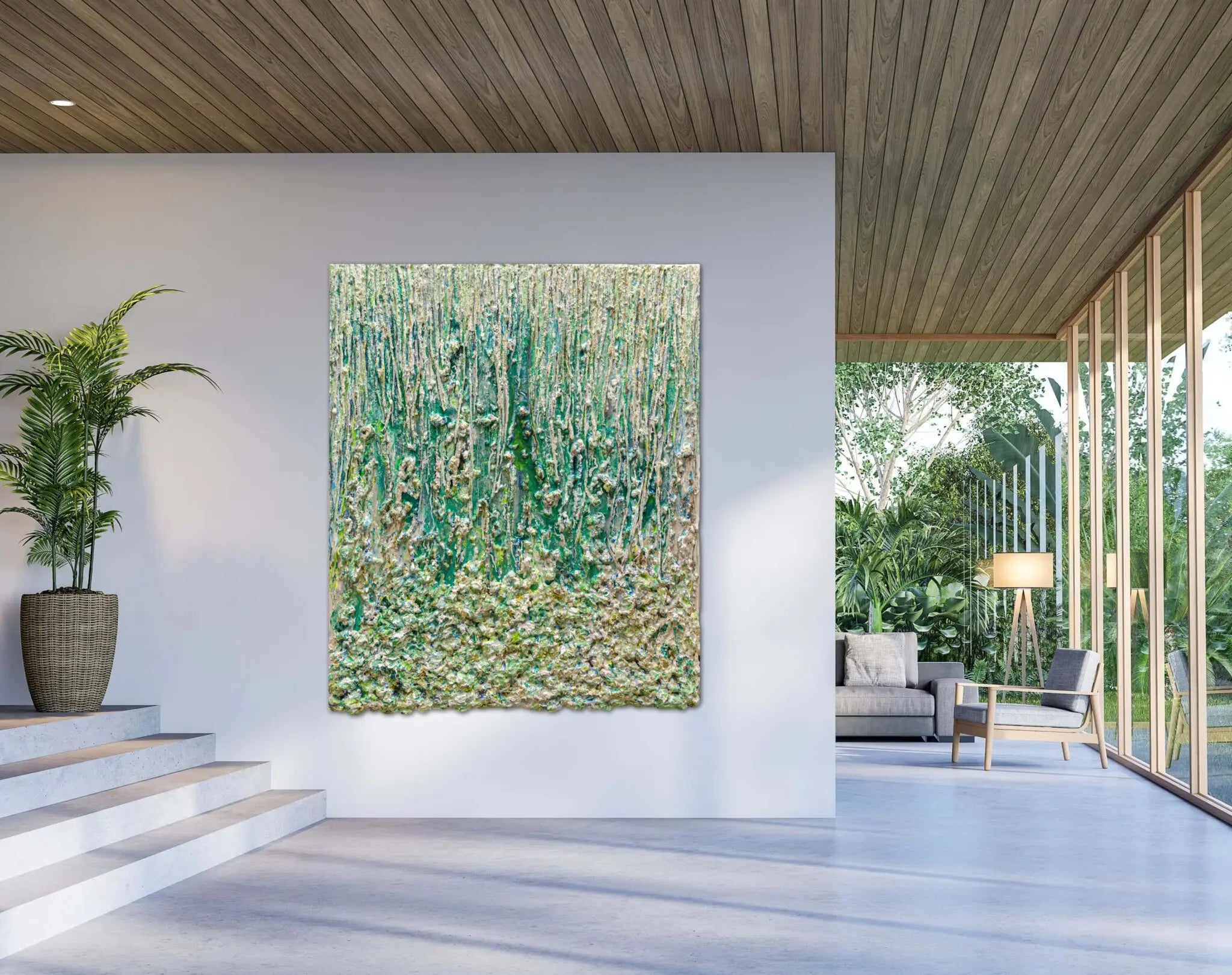
Bryan Ricci’s Untitled 7.1.25 demonstrates how green can exist as movement rather than static color. His pigment-driven process creates depth through accumulation, repetition, and material density.
In interiors, material-driven green abstraction often behaves like an environmental element. The layered surface catches light differently throughout the day, allowing the artwork to subtly shift. This creates a living presence in a space, which is particularly effective in contemporary interiors that prioritize texture and natural material language.
Green as Immersion, Nature, and Sensory Calm

Cascading Oasis by Haleh Mashian translates the sensory experience of water into material form. The layered cement, resin, and pigment create movement that feels both powerful and meditative.
Green works rooted in water imagery often produce a physiological calming response. In homes, these pieces work especially well in bedrooms, wellness spaces, or collector living areas where emotional atmosphere is prioritized. The tactile surface invites slow looking, reinforcing the psychological slowing that green naturally encourages.
Green as Depth, Cycles, and Quiet Contemplation

Mashian's Emerald Pools explores green through movement and depth. The layered impasto mimics tides, currents, and shifting water states, reinforcing green’s association with renewal and life cycles.
In interior settings, works like this often feel immersive. They create visual depth similar to looking into water or landscape distance. This can expand how a room feels spatially, particularly in minimalist or neutral interiors.
Green and the Human Form: Emotional Grounding and Transformation

Inner Vibration 3 by Haleh Mashian shows how green can interact directly with the human figure. The cascading green hair reads as energy, vitality, and spiritual abundance. The gold ground introduces contrast between material richness and emotional presence.
Figurative works that incorporate green often create emotional grounding inside interiors. They humanize space. They introduce presence without visual aggression. These works are particularly strong in private residential settings or collector environments where emotional connection matters as much as design cohesion.
Green as Myth, Narrative, and Symbolic Landscape

Amy Zerner’s Dance of Life uses green as part of a symbolic ecosystem. Gardens, celestial imagery, and natural motifs merge into a narrative environment where green represents renewal, growth, and spiritual continuity.
Narrative green works perform beautifully in layered interiors such as dining rooms, salons, or hospitality spaces. They create visual storytelling that unfolds over time rather than delivering immediate visual impact.
Green as Body, Landscape, and Psychological Space

In Aline Mare's Girl with the Pearl, green operates as atmosphere and psychological landscape. The blending of body and environment reflects green’s deeper symbolic connection to transformation and inner life.
Works like this often create intimate spatial experiences. They work especially well in bedrooms, private corridors, or quiet transitional spaces where viewers engage with art in a more personal way.
Why Green Artwork Endures in Interior Design
Green remains one of the most versatile colors in art collecting because it connects directly to nature rather than trend cycles. It supports emotional calm, spatial depth, and material richness simultaneously.
Across abstraction, figuration, narrative, and material-driven practice, green consistently:
- Grounds interior environments
- Reduces visual fatigue
- Supports emotional regulation
- Enhances natural material palettes
- Creates long-term design relevance
As interiors continue moving toward biophilic design and material authenticity, green artwork will remain central to both residential and hospitality environments.