How Art Evolves: From 1900 to Today and Why It Still Shapes the Way We Live With Art
Art history is not a series of isolated movements. Each era grows out of the psychological and cultural needs of the one before it. Artists respond to uncertainty, excess, trauma, progress, and technology by redefining how art looks, feels, and functions in our lives.
For art collectors and interior designers, understanding this evolution creates clarity. It explains why contemporary art looks the way it does and why certain works feel right in today’s spaces.
Early Modernism (1900–1945): Breaking the Rules of Seeing
At the beginning of the 20th century, rapid industrialization and global conflict disrupted traditional ideas of order. Artists rejected realism and academic conventions, turning inward to explore perception and the subconscious.
Psychological climate: Instability, anxiety, and a search for new meaning.
Representative artists:
Picasso dismantled traditional perspective by fracturing form and space, allowing multiple viewpoints to coexist within a single composition. His Cubist works challenged how reality could be represented, shifting art away from imitation and toward interpretation. This radical approach laid the groundwork for abstraction and continues to influence how contemporary artists think about structure, layering, and spatial tension.

Henri Matisse treated color as an emotional and psychological force rather than a descriptive tool. Through simplified forms and bold palettes, his work prioritized feeling over realism. This emphasis on color as mood remains foundational for contemporary painting and interior-focused art, where atmosphere and emotional resonance are central.

Salvador Dalí brought the unconscious mind into visual form, drawing from Freudian psychology to depict dreams, fears, and desire. His meticulous technique paired with surreal imagery expanded art’s role as a portal into inner experience. Today, his influence can be seen in narrative-driven and psychologically charged contemporary works.

This era introduced art as inquiry rather than imitation, laying the foundation for abstraction and conceptual thinking.
Post-War Modernism (1945–1960s): Scale, Emotion, and Presence
After World War II, artists sought a visual language capable of expressing profound emotional weight. Representation felt insufficient. Abstraction allowed artists to communicate through gesture, scale, and atmosphere.
Psychological climate: Reconstruction, emotional release, and existential reflection.
Representative artists:
Jackson Pollock redefined painting as an event rather than a finished image. His gestural, all-over compositions emphasized movement, process, and physical engagement with the canvas. This shift toward material presence and embodied making resonates strongly in contemporary abstraction and sculptural painting.

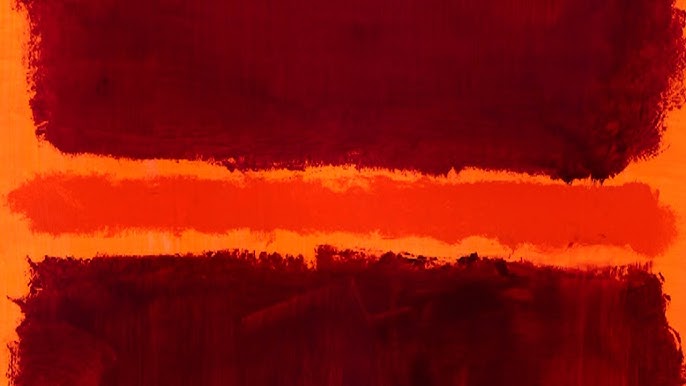
Mark Rothko used expansive fields of color to create immersive, contemplative experiences. His paintings invite stillness and emotional introspection, influencing how art interacts with space. In contemporary interiors, this legacy lives on in works that prioritize atmosphere and sensory impact over narrative detail.

Willem de Kooning blurred the boundary between abstraction and figuration, allowing forms to emerge and dissolve simultaneously. His work acknowledged tension, instability, and contradiction, qualities that remain central to contemporary art that resists clean categorization.

This era transformed painting into an immersive experience and established art as a defining spatial element within interiors.
Pop Art and Minimalism (1960s–1970s): Control and Detachment
As mass media and consumer culture expanded, artists reacted against emotional excess. Some embraced popular imagery, while others stripped art down to its most essential forms.
Psychological climate: Saturation, skepticism, and a desire for clarity.
Representative artists:
Andy Warhol reflected consumer culture back onto itself, transforming everyday products into cultural icons. His use of repetition and mechanical processes questioned originality and authorship. Contemporary artists continue to build on his ideas by examining consumption, branding, and mass imagery through more tactile or deconstructed means.

Donald Judd rejected illusion and expression in favor of industrial materials and clear spatial logic. His work emphasized objecthood and architectural presence, deeply influencing modern and contemporary interiors where clarity, proportion, and material honesty are valued.

Agnes Martin’s restrained compositions focused on subtle variation, rhythm, and quiet order. Her work offers a meditative counterpoint to visual noise, inspiring contemporary artists who explore repetition and minimal gesture as pathways to emotional clarity.

This era aligned art closely with architecture, influencing modern interiors through restraint and precision.
Postmodernism (1970s–1990s): Questioning Authority
By the late 20th century, artists questioned originality, authorship, and institutional power. Art became layered, referential, and context-driven.
Psychological climate: Distrust of grand narratives and fixed truths.
Representative artists:
Cindy Sherman used photography to interrogate identity, gender, and constructed imagery. By positioning herself as both subject and author, she exposed how visual culture shapes perception. Her influence is evident in contemporary practices that examine selfhood and representation.

Jean-Michel Basquiat fused text, symbolism, and raw mark-making to address race, power, and historical erasure. His work reintroduced urgency and social critique into contemporary painting, setting a precedent for artists who merge abstraction with cultural commentary.

Barbara Kruger combined bold text with appropriated imagery to confront systems of power and persuasion. Her work sharpened art’s role as critique, influencing contemporary artists who use language and visual disruption to challenge authority.

This period expanded art’s narrative and conceptual reach, encouraging collectors to engage with storytelling and meaning.
Global Contemporary Art (2000–2010s): Experience and Identity
As globalization reshaped culture, artists worked across disciplines, materials, and borders. Art became experiential and often site-responsive.
Psychological climate: Search for identity, connection, and belonging.
Representative artists:
Olafur Eliasson creates immersive environments that engage perception, light, and natural phenomena. His work shifts art from object to experience, influencing how contemporary installations interact with architecture and public space.

Yayoi Kusama’s use of repetition and pattern explores infinity, obsession, and self-erasure. Her immersive environments blur boundaries between viewer and artwork, shaping how contemporary art addresses scale, participation, and sensory engagement.

Anish Kapoor’s sculptural works manipulate void, reflection, and material depth. By engaging perception and physical presence, his work influences contemporary artists who explore space as both psychological and architectural.

Collectors and designers began prioritizing material presence and experiential impact alongside visual harmony.
Contemporary Art Today (2020s–Now): The Return to the Human Hand
In a digitally saturated world, today’s art reflects a renewed interest in tactility, texture, and material depth. Artists balance technology with handmade processes.
Psychological climate: Digital fatigue and a desire for grounding.
Representative artists:
Julie Mehretu layers abstraction, mapping, and gesture to reflect complex social and political systems. Her work mirrors the density of contemporary life, offering a visual language for interconnected global realities.

Mark Bradford builds textured surfaces from found materials tied to urban environments. His process-driven approach emphasizes labor, history, and material memory, resonating strongly in contemporary mixed-media and sculptural practices.

Sterling Ruby’s multidisciplinary work spans painting, sculpture, and installation, often combining industrial and handmade processes. His practice reflects the current moment’s balance between raw materiality and conceptual rigor.

This moment integrates abstraction, concept, and physical presence, aligning naturally with contemporary interiors.
Why This Matters for Collectors and Interior Designers
Every artwork carries the psychological imprint of its time. Understanding how each era builds on the last allows collectors to form cohesive collections and designers to place art with intention rather than trend.
Art history is not distant. It continues to shape the spaces we inhabit today.