She Contains Multitudes
Haleh Mashian's Figurative Series as a Living Archive of the Divine Feminine
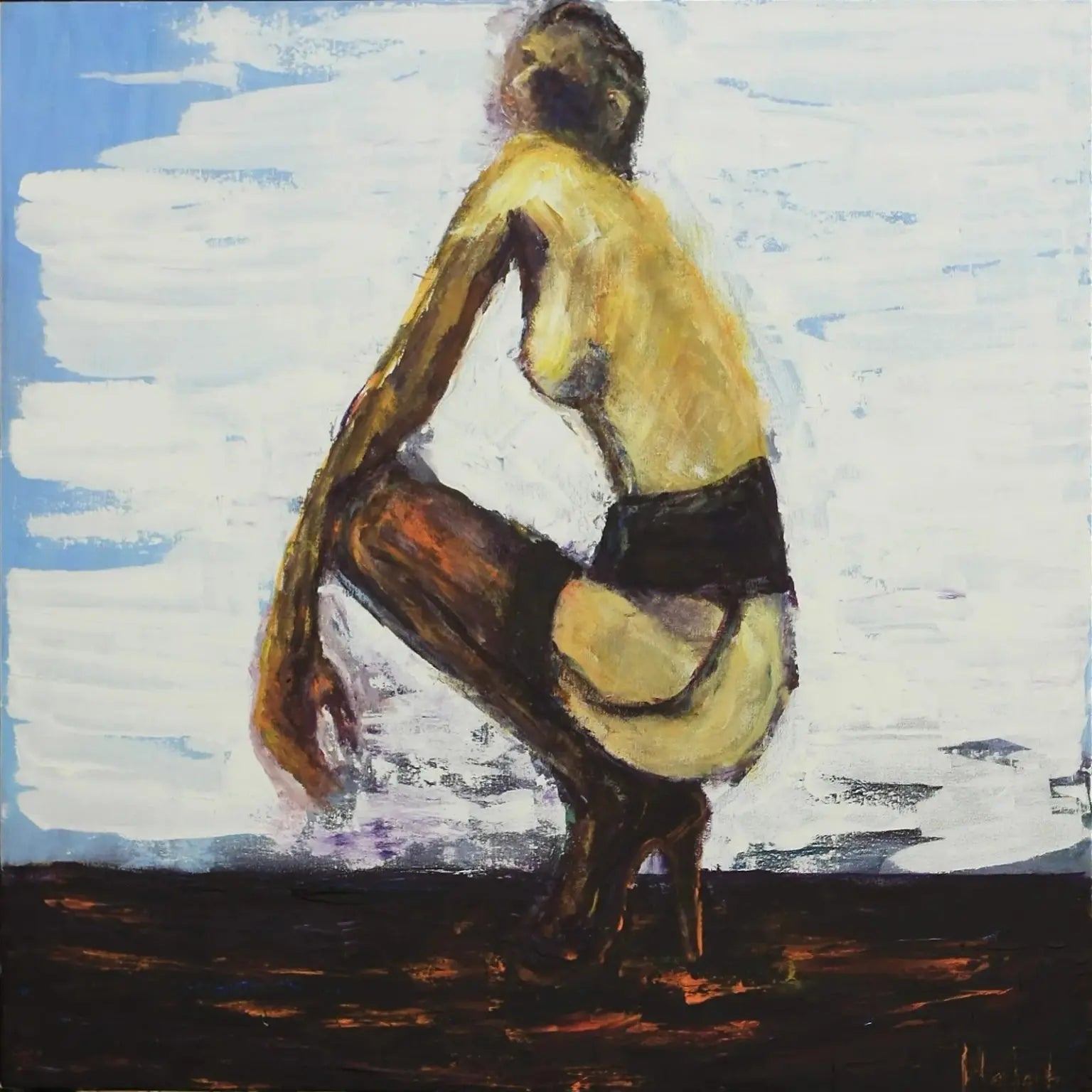
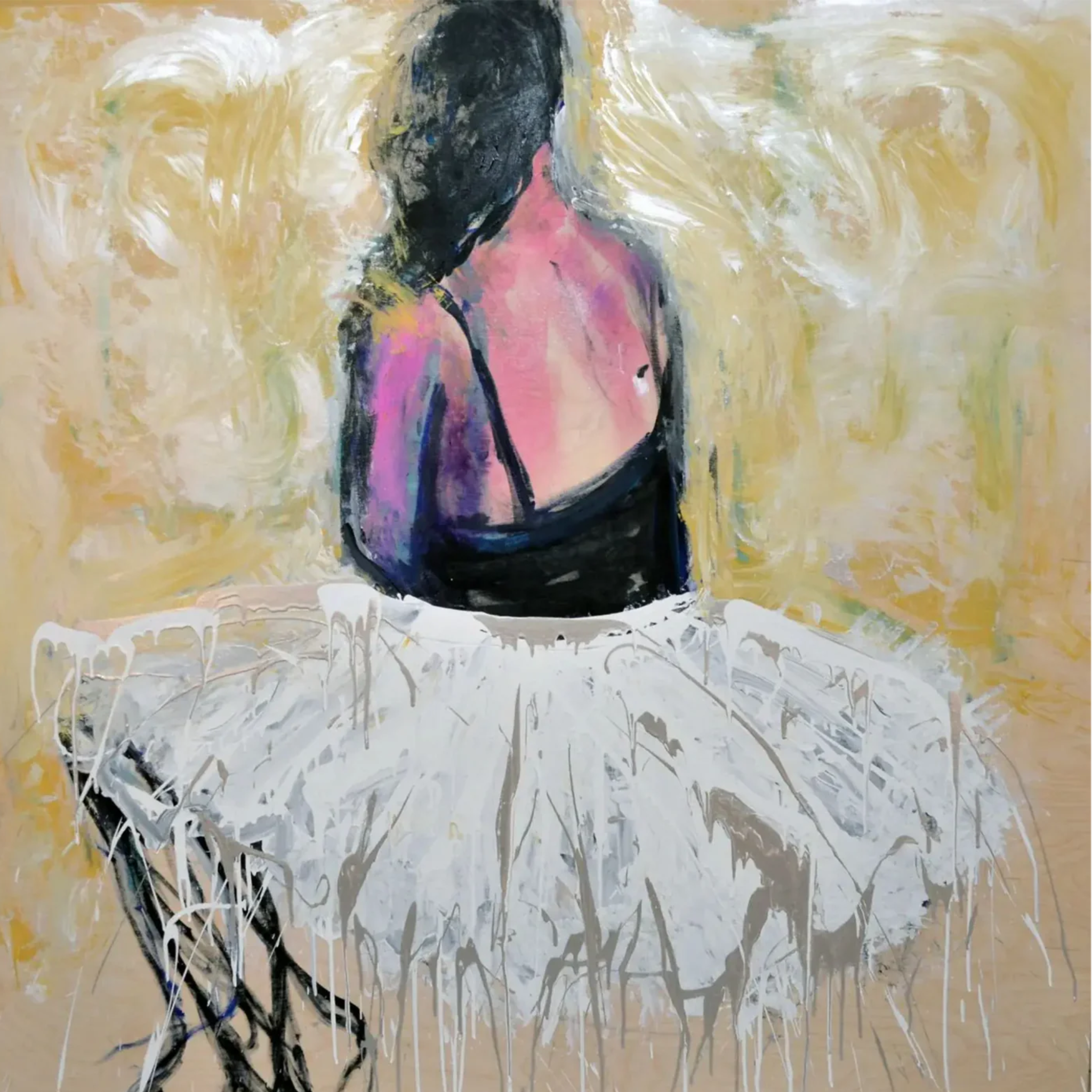
There is a conversation happening in paint. It began the moment Haleh Mashian set aside the landscape and turned her gaze inward — toward the female form, not as subject, but as symbol. As oracle. As archive.
In her Figurative Series, Mashian embarks on what may be the most intimate artistic journey of her career: an excavation of what it means to be feminine in all its contradictions. The series is, in her own words, "an homage to the dichotomies of what it means to be feminine: soft and bold, fluid and stalwart, vulnerable and invincible." These are not portraits. They are conjurings.
As we enter Women's History Month, there is no more fitting moment to step inside this body of work and read it for what it truly is: a pantheon. Each figure, rendered in Mashian's signature layers of resin, glitter, fabric, beads, and jewel-toned pigment, carries within her the DNA of an ancient feminine archetype — the goddess traditions that have named and honored the multiplicity of womanhood for thousands of years.
"There's the pensive innocent, the warrior, the complicated Medusa… no need to apologize."
Mashian said this about her figurative women, and in that single sentence she maps out an entire cosmology. This blog is an attempt to walk through that cosmology — painting by painting, archetype by archetype — and hear what these women have been trying to tell us all along.
The Archetypes in Paint
Across cultures and millennia, the divine feminine has been organized into archetypes — recurring patterns of feminine energy that appear in mythology, religion, Jungian psychology, and folk tradition. The goddess scholar Jean Shinoda Bolen identified twelve primary archetypes in women's psychology: the Virgin Goddesses (Artemis, Athena, Hestia), the Vulnerable Goddesses (Hera, Demeter, Persephone), and the Alchemical Goddess (Aphrodite). To these we can add figures from Persian, Indigenous, and global mythologies that expand the canon.
What makes Mashian's Figurative Series remarkable is that she arrives at this same map through pure artistic instinct. Working with live models, building up layers of material that she describes as evocative of "the richness of being a woman," she has — without naming them as such — summoned the full spectrum of the divine feminine onto canvas and wood panel.
What follows is a reading of her figures through this mythological lens. It is not meant to reduce these paintings to symbols, but to amplify them — to give language to the power already present in the work.
Awaken 2 · Persephone — The One Who Returns

Persephone is the goddess of emergence. Dragged into the underworld, she learns its secrets and rises each spring transformed. Awaken 3 carries this energy unmistakably. The figure in the series appears to be in a state of emergence — not from sleep, but from a deeper knowing. The layered textures in this work, Mashian's characteristic build-up of resin and gel, suggest something surfacing from beneath. To awaken, in Mashian's visual language, is not a gentle thing. It is tectonic. It is the underground pressing toward light.

Femme 2 · Artemis — The Sovereign Self
Artemis, goddess of the hunt and the moon, is the archetype of the woman who belongs to herself — focused, autonomous, complete. The Femme series presents the female form stripped of narrative context. There is no story of who these women are in relation to anyone else. They simply are. Their jewel-toned grounds — Mashian's chosen palette for the series because of "the richness of being a woman" — function less as background and more as atmosphere, an energetic field the figure generates around herself. These are women who take up space unapologetically. Artemis would recognize them immediately.

Inner Vibration 3 · Shakti — The Primordial Pulse
The concept of Shakti in Hindu tradition is not a goddess so much as the animating principle of the universe itself — the divine feminine energy that moves through all things. The Inner Vibration paintings feel less like portraits and more like visualizations of frequency. The figure is present, but she is also dissolving at the edges, becoming the energy that surrounds her. Mashian's use of glitter and layered resin here is not decorative; it is cosmological. She is painting vibration. She is painting the invisible made visible — the life force that women carry, often invisibly, through the world.

Urban Mermaid · Sedna — The Boundary Dweller
Sedna is the Inuit goddess of the sea, a figure who exists between worlds — part human, part ocean, neither fully tame nor fully wild. Mashian's Urban Mermaid inhabits exactly this liminal space. The painting reimagines the mermaid mythos in neon greens, fiery reds, and graffiti-inflected texture. This is not the passive creature of fairy tales. She is a mermaid who has absorbed the city into her body, who carries both the ancient ocean and the contemporary street. She is the feminine that refuses the binary of nature and culture, choosing instead to be the point where they collide.

Mona Hissa · Isis — The Keeper of Mystery
Isis, in Egyptian mythology, is the great magician — the goddess who gathers the scattered pieces of the divine and reassembles them into wholeness. The name Mona Hissa evokes a double resonance: the most iconic portrait in Western art history meets something distinctly other, something from a different tradition of beauty and mystery. Mashian's figure here holds the gaze with the same inscrutability as her art historical namesake, but with the full textural richness of a woman who has lived more than a single plane can contain. She knows things. She is keeping secrets. Not out of deception, but because some knowledge cannot be held in words.

Tribal Rhythm · Oya — The Warrior of Transformation
Oya is the Yoruba orisha of wind, storms, and transformation. She is the force that sweeps away what is no longer serving and makes room for what must come. Tribal Rhythm carries this energy in its very title — rhythm as both music and as something older, the pulse of collective female memory, of ceremony, of the body as instrument. The figure in this work is not still. Even in paint, she moves. She carries within her the memory of every woman who has danced to summon rain, who has wept and then stood up, who has transformed her grief into momentum.

La Coquette · Aphrodite — The Sovereign of Desire
La Coquette is often misread as a diminutive figure — playful, perhaps superficial. But Aphrodite was never trivial. She was the most politically dangerous goddess in the Greek pantheon, the one whose power no god could fully resist. Mashian's La Coquette knows this. She wears her playfulness as armor and as invitation simultaneously. The coquette, in Mashian's hands, is not performing for anyone's approval; she is performing the ancient rite of feminine self-delight. She takes pleasure in herself. This is radical. This is Aphrodite's true gift: to love oneself so completely that the world must stop and take notice.

Sophia · Sophia — The Embodied Wisdom
In Gnostic tradition and early Christian mysticism, Sophia is the goddess of divine wisdom — the feminine face of the sacred intellect. Mashian does not shy away from this naming; she leans into it. The painting Sophia is among the most direct invocations in the series: a figure who is simultaneously intimate and vast, who holds knowledge not as abstraction but as lived experience. Wisdom, in the feminine tradition, is not what is learned in books. It is what is carried in the body. In the hands. In the memory of the cells. Mashian's Sophia embodies this — a woman whose knowing lives in her skin.

A Quiet Moment · Hestia — The Sacred Interior
Hestia is the forgotten goddess, the one who stayed home while the others had adventures. But in Jungian psychology she is perhaps the most essential: she is the archetype of interiority, of the still center that makes all outward movement possible. A Quiet Moment is the painting that understands this most deeply. Here, Mashian steps back from drama and lets the figure simply be. There is no performance. There is no narrative. There is only the sacred act of a woman inhabiting herself — the radical, revolutionary, often overlooked gift of stillness.

Self Reflecting · Narcissa — The Witness
Not Narcissus — the tragic boy who fell in love with his reflection — but his feminine counterpart: the woman who looks at herself not from vanity but from necessity. The act of self-reflection for women has historically been complicated by the gaze of others. Mashian's Self Reflecting reclaims the mirror as a tool of self-knowledge rather than self-objectification. This figure does not look at herself to confirm she is beautiful. She looks to know herself. To witness herself. The act of women truly seeing themselves — without the mediating layer of how they are seen by others — is itself a form of goddess work.
The Material as Message
To understand Mashian's figurative women as divine archetypes is also to understand the significance of how they are made. Beads, glitter, resin, fabric, paper, jewels — these are not embellishments. They are theology.
In nearly every goddess tradition, the divine feminine is associated with adornment as sacred practice. The jewels of Lakshmi. The shells of Yemaya. The gold of Hathor. When Mashian builds her figures from these materials — embedding them in layers that must be read slowly, approached close to discover their full content — she is enacting this tradition. She is making women who are worth looking at slowly. Women whose surface rewards attention.
"I wanted all of them to be in a jewel tone because of the richness of being a woman. We have a lot going for us."
This is perhaps the most direct statement of divine feminine philosophy in Mashian's entire practice. The jewel tone is not decorative. It is a declaration. It says: richness is inherent. It says: the depth is already there. The artist's task is simply to make it visible.
The Archive as Act of Resistance
We do not create archives of things that are not in danger of being forgotten. Women's History Month exists because women's history has been, systematically and persistently, erased. The divine feminine exists in art because it was suppressed from theology. Haleh Mashian's Figurative Series exists because there have never been enough paintings of women who contain the full spectrum of what women are.
To name these figures as goddesses — as archetypes that have existed for thousands of years — is to resist that erasure. It is to say: this is not new. Women have always been this complex, this powerful, this multitudinous. The art is not creating these truths; it is recovering them.
Mashian, who came to the United States seeking asylum, who built a gallery and an artistic practice from that journey of survival and reinvention, understands this in her bones. The Figurative Series is not just an artistic statement. It is a personal mythological text — the story of what women carry, and how they carry it, and why it matters that it be carried with beauty.
Come See for Yourself
The Figurative Series is available to view and acquire at halehmashian.com and through Mash Gallery in West Hollywood. This Women's History Month, we invite you to spend time with these paintings — not as objects on a wall, but as what they are: a living archive of the divine feminine, rendered in jewel tones and resin and the accumulated wisdom of a woman who has spent three decades looking carefully at the world.
See more of Haleh Mashian's Figurative Series at halehmashian.com.